The global nickel industry continues to evolve in 2026, with changing supply conditions, industrial investment, and increasing requirements for material performance shaping the market. While nickel is widely used in stainless steel and battery manufacturing, nickel-based alloys remain essential to industries where conventional materials cannot provide sufficient resistance to corrosion, high temperatures, or mechanical stress.
For manufacturers and equipment suppliers, the focus is not simply on nickel prices. Material selection, product quality, traceability, and reliable delivery are becoming increasingly important factors in industrial procurement.
1. Global Nickel Market: Supply and Demand Continue to Shift
According to the International Nickel Study Group (INSG), global primary nickel demand is forecast to reach approximately 3.85 million metric tons in 2026, while production is expected to reach 3.87 million metric tons. This represents a projected market surplus of around 19,000 metric tons.
The market is also expected to remain influenced by production developments in Indonesia, one of the world’s largest nickel-producing countries.
However, the overall nickel market balance does not tell the whole story for specialty alloy manufacturers. Primary nickel is only one part of the supply chain. The production of finished nickel-based alloys also involves alloying elements, melting technology, processing capabilities, quality control, and compliance with applicable material standards.
As a result, the availability and procurement conditions of specific nickel alloy grades may differ considerably from general nickel market trends.
2. Demand for Corrosion-Resistant Alloys in Chemical and Energy Industries
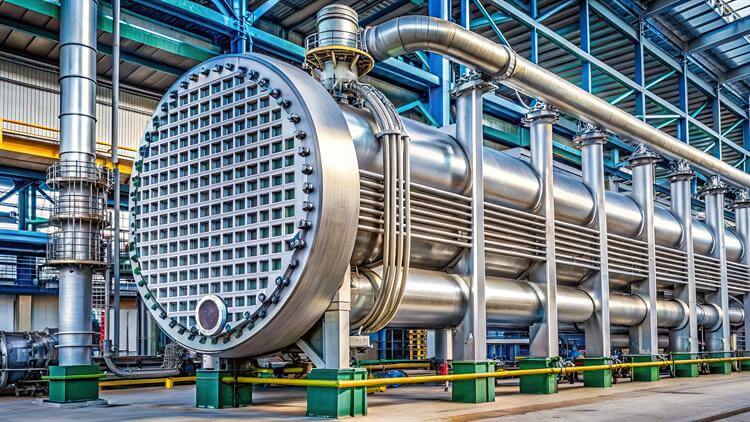
Chemical processing, petrochemical production, and oil and gas operations continue to require materials capable of performing in demanding operating environments.
Equipment exposed to acids, chlorides, high temperatures, and aggressive process media often requires specialized nickel-based alloys rather than conventional stainless steel.
Several grades are widely used in these applications:
Hastelloy C-276 (UNS N10276): Known for its excellent resistance to a wide range of corrosive environments, including many chemical processing applications.
Hastelloy C-22 (UNS N06022): Offers broad corrosion resistance and is used in equipment exposed to aggressive chemical environments.
Inconel 625 (UNS N06625): Combines corrosion resistance with high strength, making it suitable for offshore, marine, and chemical processing applications.
Monel 400 (UNS N04400): Commonly selected for marine equipment and applications involving seawater and certain chemical environments.
The selection of an appropriate grade depends on the actual operating conditions, including temperature, pressure, chemical concentration, and exposure time.
3. High-Temperature Nickel Alloys Remain Important for Industrial Equipment
Beyond corrosion resistance, high-temperature performance is another major reason nickel-based alloys are used in demanding industrial applications.
Gas turbines, power generation equipment, aerospace engines, and other high-temperature systems require materials that can maintain mechanical strength and structural stability under elevated temperatures.
Inconel 718 (UNS N07718) is a well-known precipitation-hardening nickel-based superalloy valued for its high strength and fatigue resistance.
Inconel 625 is also used in high-temperature environments where oxidation resistance and corrosion performance are important.
As industrial equipment becomes more demanding, consistent material properties and manufacturing quality remain critical considerations for engineers and procurement teams.
4. Quality Certification and Material Traceability Matter More Than Ever
For international buyers, purchasing nickel-based alloys involves more than confirming the grade and dimensions.
Material certification, chemical composition, mechanical properties, inspection procedures, and product traceability all play important roles in supplier evaluation.
Common procurement requirements include:
Compliance with relevant ASTM, ASME, EN, and other applicable material standards.
Chemical composition and mechanical property verification.
EN 10204 3.1 inspection certificates, where specified.
Third-party inspection when required by the project.
Clear identification and traceability of supplied materials.
For pressure equipment, petrochemical facilities, and other critical industrial installations, these requirements help buyers verify that the supplied materials meet the project specifications.
Reliable documentation and consistent quality control are therefore important parts of long-term supplier relationships.
5. What Buyers Should Consider When Sourcing Nickel-Based Alloys
When selecting a nickel alloy supplier, buyers should look beyond the quoted unit price. A suitable supplier should be able to understand the technical requirements and provide products that match the intended application.
Several factors deserve attention:
Material and grade availability: Different projects require different grades, including Hastelloy, Inconel, Incoloy, and Monel alloys.
Product forms: Depending on the equipment design, buyers may need plates, sheets, bars, rods, tubes, pipes, strips, flanges, or custom forgings.
Manufacturing and processing capability: Products such as tube sheets and baffle plates may require machining and fabrication according to customer drawings.
Quality assurance: Inspection records, material certificates, and traceability should be discussed before order confirmation.
Lead time and delivery: Production schedules and delivery arrangements should be clearly confirmed, particularly for maintenance projects and urgent requirements.
6. BELNADE: Nickel Alloy Products for Industrial Applications
Shanghai BELNADE Innotech New Material Co., Ltd. supplies specialty nickel-based alloys for customers in chemical processing, petrochemical, oil and gas, marine, and other industrial sectors.
Our product range covers major alloy families, including Hastelloy, Inconel, Incoloy, Monel, and commercially pure nickel.
Available product forms include:
Nickel alloy plates, sheets, strips, and coils
Nickel alloy bars, rods, and wires
Nickel alloy tubes and pipes
Nickel alloy flanges and forgings
Heat exchanger tubes, tube sheets, and baffle plates
Products can be supplied according to applicable ASTM, ASME, EN, and other customer specifications. Manufacturing and inspection requirements can be discussed based on individual project needs.
With a focus on material quality, technical support, and dependable delivery, BELNADE aims to support industrial customers with suitable nickel alloy products for both standard procurement and customized requirements.
Conclusion
The nickel industry in 2026 is being shaped by changing supply conditions and evolving demand across multiple industrial sectors. Although primary nickel market trends attract considerable attention, the long-term importance of specialty nickel-based alloys is closely connected to their performance in demanding operating environments.
For equipment manufacturers, engineering companies, and industrial procurement teams, choosing the right alloy grade and a reliable supply partner remains essential to project quality and operational performance.
Looking for nickel alloy materials for your next project? Contact BELNADE to discuss your grade, product form, dimensions, and technical requirements.